In industrial kiln construction and maintenance, refractory materials are the “steel guardians” protecting high-temperature production. Refractory plastics, refractory ramming mixes, and refractory spray coatings, with their unique construction and application advantages, have become widely used monolithic refractories. What are the differences between these three? Rongsheng Monolithic Refractories Manufacturer, based on years of production and sales experience, provides you with solutions for high-temperature furnace linings.
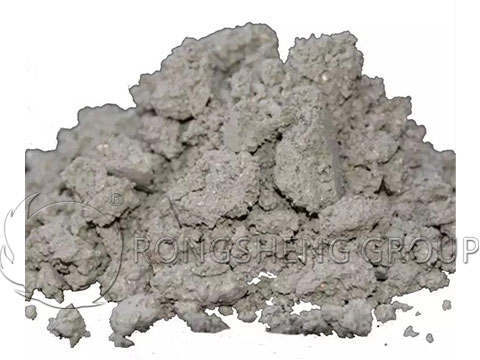
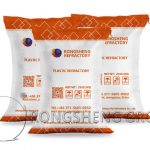
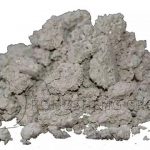
Refractory plastic is a paste-like, unshaped refractory material, primarily composed of refractory aggregates, powders, binders, and additives. Its key characteristic is its exceptional plasticity at room temperature, allowing it to be molded into various shapes like clay.
Its application primarily involves manual tamping and pressing. It requires little or no water to form, exhibits stable strength development after molding, shows minimal volume change during baking, and is resistant to cracking.
Refractory plastic is particularly suitable for complex shapes and areas difficult to work with, such as kiln doors, around burner bricks, and the arch legs of the kiln roof. Furthermore, it possesses excellent thermal shock resistance and corrosion resistance, enabling long-term service under repeated temperature fluctuations.
Refractory ramming mix—a dense, hard structure compacted by powerful tamping.
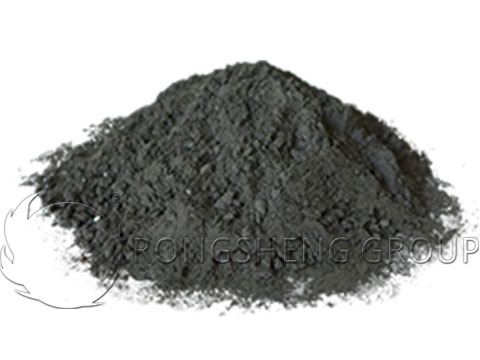
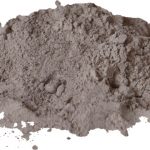
Refractory ramming mix, like other materials, is composed of aggregates, powders, and binders. However, it has extremely low moisture content, appearing as loose granules or powder, requiring powerful external tamping equipment to form its desired shape.
During construction, the ramming mix is laid in layers on the work area. Then, it is compacted layer by layer using tools such as pneumatic or electric tamping machines. External force eliminates the voids between the material particles, forming a dense, integral structure.
The core advantages of this material are its high bulk density, low porosity, high compressive strength, and extremely strong resistance to molten slag penetration and erosion. It is commonly used in areas subjected to high temperature, high pressure, and strong erosion, such as the tapping trough of blast furnaces, the furnace bottom of electric furnaces, and the working layer of steel ladles.
Refractory Spray Coating – The Efficient and Convenient “Kiln Spraying Master”
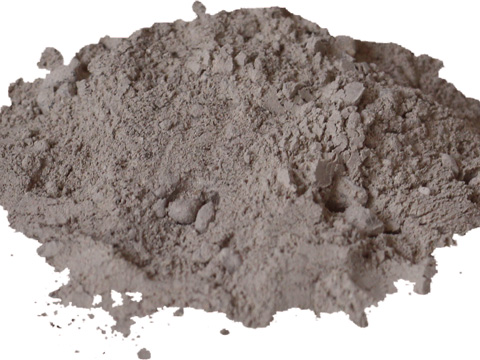
Refractory spray coatings are monolithic refractory materials specifically designed for spray application. They can be categorized into wet spraying, dry spraying, and semi-dry spraying methods based on the application process.
Their formulations include special additives that allow the material to be evenly sprayed and adhered to the application surface under high-pressure airflow, quickly forming a refractory layer without the need for molds.
The biggest advantage of spray coatings is their high application efficiency and short construction period, making them particularly suitable for large-area furnace lining repairs and new furnace lining construction. Examples include rotary kiln lining repairs and boiler furnace wall spraying. Furthermore, the sprayed coating exhibits excellent integrity and strong adhesion, and the coating thickness can be adjusted as needed.
In fact, the core difference between refractory plastics, ramming mixes, and spray coatings lies in their formulation design and application process, which in turn determines their performance and application scenarios. Remember this: choosing the right material ensures more stable and longer-lasting operation of industrial kilns.