In the production of lightweight refractory materials, six raw materials are frequently used as refractory aggregates: hollow spheres, porous clinker, porous mullite, ceramsite, expanded perlite, and expanded vermiculite. RS Monolithic Refractory Factory supplies a variety of monolithic insulating castables. Reasonable prices and reliable product quality.
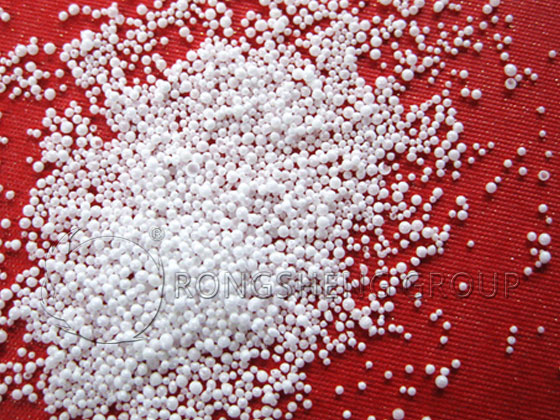
Alumina hollow spheres are made from industrial alumina through high-temperature electrofusion blowing. Its main crystalline phase is α-Al₂O₃, with a chemical composition of α-Al₂O₃ greater than 98.5%, and SiO₂ and Fe₂O₃ less than 0.5% each. The hollow spheres are white, hollow, thin-walled spheres with a typical natural gradation of 5~3 mm (7%~10%), 3~2 mm (10%~17%), 2~1 mm (22%~32%), 1~0.5 mm (26%~36%), and 0.5~0.2 mm (15%~28%). Their corresponding bulk densities are 540~600 kg/m³, 600~650 kg/m³, 650~750 kg/m³, 750~850 kg/m³, and 850~950 kg/m³. The long-term service temperature of these spheres is 1800℃.
Zirconia Hollow Spheres
Zirconium oxide hollow spheres are made by high-temperature electrofusion blowing of zirconium oxide. Their main crystalline phase is cubic ZrO2, with a content ≥80%; the chemical composition is ZrO2 + CaO ≥99%. The particle size of the hollow spheres is 0.2~5mm, the bulk density is 1500~2500kg/m3, and the maximum service temperature is 2200℃.
Cenospheres
Cenospheres are aluminosilicate glass beads bleached from fly ash in thermal power plants. They are grayish-white, thin-walled, hollow, and have a closed, smooth surface. The performance of cenospheres varies considerably depending on the coal quality and combustion conditions. The cenospheres, suitable for use in refractory materials, have the following chemical composition: Al₂O₃ 30%~43%, SiO₂ 50%~61%, Fe₂O₃ 1.1%~3.8%, CaO 0.5%~1.8%, MgO 0.2%~1.3%, R₂O 0.4%~1.6%, and a loss on ignition of 0.2%~1.5%. They have a refractoriness ≥1610℃. The cenospheres have a particle size <200μm and a bulk density of 0.3~0.4g/cm³. They are characterized by their light weight, strong shell, and low thermal conductivity, making them an excellent raw material for lightweight refractory materials.
Porous Clinker
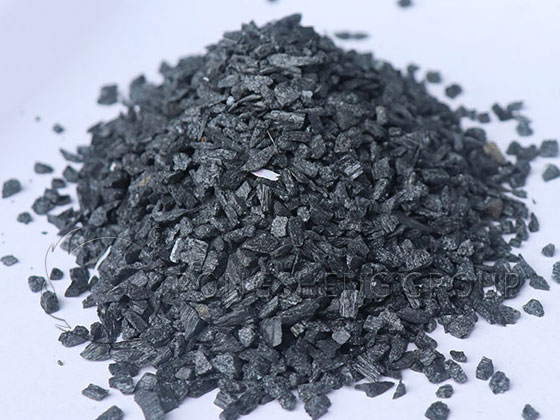
Porous clinker is produced by calcining hard clay ores or bauxite after processing. First, the ore is ground and mixed with loss on ignition (LOI) and a binder, then pelletized on a pelletizing disc. Next, the pellets of a certain strength are loaded into a kiln and calcined at 1350–1460℃ to obtain porous clinker. This material is available in two types: clay-based and high-alumina-based. Both can be used as refractory aggregates directly or after crushing and grading.
Chemical composition of clay-based porous aggregate: Al₂O₃ 40–42%, SiO₂ 50–52%, Fe₂O₃ 32.1%–2.7%, RO 1.0%–1.7%, R₂O 0.5%–1.1%, Loss on ignition 0.3%–0.6%. The loose bulk density is 0.55~0.85 g/m³, the granular bulk density is 1.1~1.6 g/m³, the compressive strength is ≥6 MPa, the water absorption rate is 10%~20%, and the refractoriness is greater than 1670℃. The chemical composition of the high-alumina porous aggregate is Al₂O₃≥55%, SiO₂ 35%~40%, Fe₂O₃≤2.5%. The loose bulk density is 0.9~1.2 g/cm³, and the refractoriness is greater than 1690℃.
Porous mullite is produced by high-temperature firing of natural raw materials. Its crystalline phase is predominantly mullite with well-developed crystals. Its needle-like crystals interlock to form a network structure, thus creating porous mullite. Its compressive strength is 2-3 MPa.
Expanded Ceramsite
Expanded ceramsite is made from fusible clay, shale, fly ash, and coal gangue, etc., through calcination to produce spherical porous particles. Its surface is rough and hard, resembling ceramic, while its interior is honeycomb-like with interconnected micropores. Expanded ceramsite is characterized by low density, low thermal conductivity, and high strength, making it an excellent artificial lightweight aggregate. It has a wide range of applications, primarily as a refractory aggregate in monolithic refractories.
Expanded ceramsite varieties include clay expanded ceramsite, shale expanded ceramsite, fly ash expanded ceramsite, and coal gangue expanded ceramsite. Based on particle shape and size, ceramsite is divided into two types: coarse ceramsite (particle size greater than 10mm) and ceramsite sand (particle size equal to or less than 10mm). Their bulk density is no greater than 1000 kg/m³ and 1200 kg/m³, respectively, and their compressive strength should be greater than 1.4 MPa.
In monolithic refractories, shale ceramsite is preferred. Its chemical composition is: α-Al₂O₃ 19%~22%, SiO₂ 58%~62%, Fe₂O₃ 7%~8%, SO₃ 0.2%~0.4%, and loss on ignition 0.8%~1.2%. Its compressive strength is 2.5 MPa, its soundness (weight loss rate) is 1.7%, and its refractoriness is 1290℃. The original shale ceramsite sand particles are divided into 10~5mm, 5~3mm, 3~1.2mm and 1.2~0.3mm, and their loose bulk densities are 400kg/m3, 440kg/m3, 480kg/m3 and 540kg/m3 respectively.
Expanded perlite
Expanded perlite is produced by calcining perlite. It is a white, porous granular material with a smooth surface, thin walls, and a honeycomb structure. Therefore, expanded perlite has a low density, typically 40-550 kg/m³; low thermal conductivity, 0.028-0.048 W/(m·K) at 200-500℃; and a refractoriness of 1280-1360℃. It also possesses sound insulation and frost resistance properties. Its chemical composition is: SiO₂ 72%-77%, α-Al₂O₃ 10%-15%, Fe₂O₃ 0.7%-1.2%, CaO 0.7%-1.8%, MgO 0.2%-0.5%, K₂O 3%-5%, Na₂O 3.0%-4.2%, and a loss on ignition of 0.2%-0.8%.
Expanded Vermiculite
Expanded vermiculite is produced by calcining vermiculite. Its bulk density is 80~300 kg/m³. If calcination is inadequate and impurities are abundant, the bulk density will be higher. Its particles are composed of extremely thin flakes filled with air, resulting in low thermal conductivity and high water absorption. The chemical composition of expanded vermiculite is: SiO₂ 37.5%~43.5%, α-Al₂O₃ 14.5%~18.9%, Fe₂O₃ 3.5%~23.4%, MgO 11.1%~22.6%, CaO 0.8%~2.8%, and loss on ignition 3.4%~12.2%. Its refractoriness is 1300~1370℃.