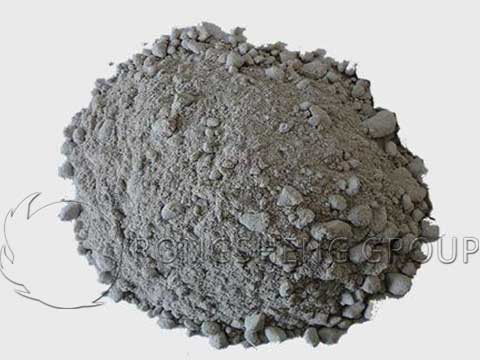
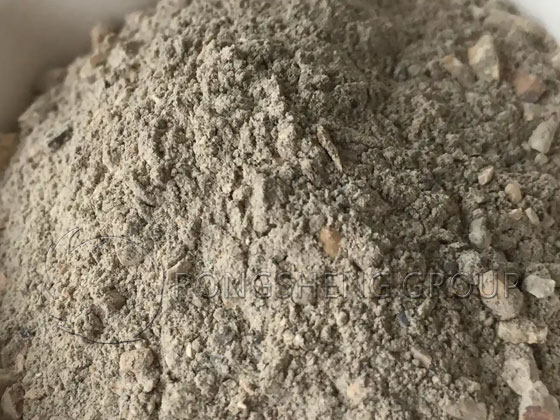
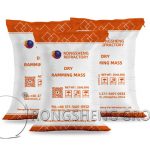
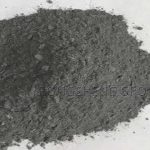
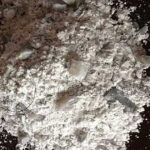
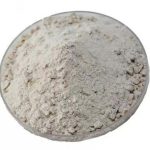
Medium-frequency induction melting furnaces are widely used in casting, steelmaking, and non-ferrous smelting due to their advantages, such as flexibility, energy saving, high efficiency, low pollution, and easy composition adjustment. The furnace lining refractory materials mostly use dry ramming mixes, which are divided into three types: acidic, basic, and neutral ramming mixes.
Dry Ramming Mixes for Furnace Linings
Alkaline ramming mixes primarily use magnesia refractories, which have advantages such as excellent erosion resistance, high melting point, and non-reaction with alkaline slag. However, magnesia ramming mixes have a large coefficient of thermal expansion and poor thermal shock resistance, which can easily lead to cracking and spalling of the furnace lining during operation. Acidic ramming mixes primarily use silica refractories, which have advantages such as readily available raw materials and low price. However, SiO2 is prone to complex crystal transformations during heating, leading to volume effects. Neutral ramming mixes primarily use corundum refractories, which have advantages such as high temperature resistance, good slag erosion resistance, no impact on molten steel quality, and short construction time. They are widely used in alloy smelting, but corundum ramming mixes also have disadvantages, such as difficulty in sintering and a high coefficient of thermal expansion.
Neutral Alumina-Magnesium Dry Ramming Material for Medium-Frequency Furnace Lining
The lining of medium-frequency furnaces primarily uses neutral alumina-magnesia dry ramming material. Its main raw materials are corundum and magnesia. At high temperatures, it generates magnesium aluminum spinel (MA), resulting in a certain volume expansion, which effectively inhibits cracking of the working layer of the lining and extends the lining’s lifespan. Currently, research on dry ramming materials mainly focuses on introducing different types of sintering agents such as borax, SiO2, and B2O3 to promote sintering and improve the strength of the ramming mass material. However, these sintering agents tend to generate low-melting-point phases at high temperatures, easily causing structural spalling during medium-frequency furnace lining operations. Calcium hexaaluminate (CA6) is a high-melting-point compound with excellent resistance to slag erosion. It has good chemical compatibility and similar thermal expansion properties with Al2O3 and is often introduced as a toughening phase into alumina materials to improve their mechanical properties. Therefore, it was considered to introduce CaO as a sintering agent into alumina-magnesia dry ramming mix to generate CA6 at high temperatures, thereby improving the high-temperature performance of the material. However, the effects of CaO on the sintering performance and microstructure of alumina-magnesia dry ramming mix have not been reported in detail. Therefore, fused alumina and fused magnesia were used as the main raw materials, and Ca(OH)2 was used as the calcium source to prepare CaO. The effect of the amount of CaO added on the phase composition, sintering performance, and microstructure of alumina-magnesia dry ramming mix was studied.
CaO can promote the sintering of alumina-magnesia dry ramming mix.
Alumina-magnesia dry ramming mix was prepared using fused alumina and fused magnesia as the main raw materials and CaO as the sintering additive by ramming. The effect of the amount of CaO added (mass fractions of 0%, 0.5%, 1%, 1.5%, and 2%) on the phase composition, sintering performance, and microstructure of alumina-magnesia dry ramming mix after heat treatment at 1600 ℃ for 3 h was studied. The results showed that an appropriate amount of CaO promoted the sintering of alumina-magnesia dry ramming mixes, significantly improving their room-temperature compressive strength. This is because CaO reacts with Al₂O₃ to form calcium hexaaluminate (CA₆), which intercalates between the corundum and spinel phases, thus increasing the strength of the ramming mix. When the CaO addition was 1% (w), the ramming mix after heat treatment at 1600 ℃ exhibited good overall performance, with a linear expansion rate of 1.38%, a bulk density of 2.86 g·cm⁻³, and an apparent porosity of 21.3%, and a compressive strength of 15.2 MPa.
Composition of Raw Materials for Alumina-Magnesium Dry Ramming Mixes and Advantages of Adding CaO
The experimental raw materials mainly consisted of fused alumina (particle sizes 5~3, 3~1, 1~0.074 and ≤0.074 mm) with w(Al2O3) ≥98.5% and fused magnesia (particle sizes 1~0.074 and ≤0.074 mm) with w(MgO) ≥96%. CaO was prepared by heat-treating Ca(OH)2 with a purity ≥95% (w) at 800 ℃ for 3 h, and used as a sintering additive.
(1) Introducing an appropriate amount of CaO can improve the sintering of alumina-magnesium dry ramming mixes and significantly increase their compressive strength. When the CaO addition amount was 1% (w), the sample exhibited good comprehensive performance. Its linear expansion rate was 1.38%, apparent porosity and bulk density were 21.3% and 2.86 g·cm⁻³, respectively, and its compressive strength was 15.2 MPa.
(2) The introduction of CaO generates plate-like CA6 layers at the particle edges of corundum aggregate and forms a stable coating structure between corundum and MA, thereby improving the mechanical properties of the material.
Influence of Spinel Micropowder on the Properties of Alumina-Magnesium Dry Ramming Reagents
To obtain alumina-magnesium dry ramming reagents with excellent mechanical properties and suitable expansion, alumina-magnesium dry ramming reagent samples were prepared using fused white corundum (5–3, 3–1, ≤1, and ≤0.074 mm) and fused magnesia (≤1 and ≤0.074 mm) as the main raw materials. The influence of different spinel micropowders (MA90, MA70, MA66, and MA60) on the properties and microstructure of the samples was investigated.
Alumina-magnesium dry ramming reagents (hereinafter referred to as dry reagents) are widely used in induction furnace working lining materials due to their small coefficient of thermal expansion, good chemical stability, excellent thermal shock resistance, and excellent mechanical properties. However, during use, magnesium aluminum spinel will form in situ, leading to a certain volume expansion and reducing the performance of the dry reagent. To control the abnormal expansion of dry ramming mixes, sintering aids such as boric acid and SiO2 powder are added to promote sintering. However, these sintering aids contain many impurities and easily form low-melting-point phases at high temperatures, deteriorating the high-temperature performance of the material. Adding pre-synthesized spinel powder to aluminum-magnesium castables yielded aluminum-magnesium castables with appropriate expansion. Adding MR70 spinel to dry ramming mixes effectively reduced the expansion of the samples and slightly improved the compressive strength of the dry ramming mixes. This indicates that spinel powder can effectively reduce the expansion of aluminum-magnesium materials and improve their mechanical properties. However, different types of spinel powder affect the performance of dry ramming mixes.
(1) Adding spinel powder to aluminum-magnesium dry ramming mixes can reduce the in-situ spinel reaction in the matrix and the resulting expansion, thereby controlling the expansion of the aluminum-magnesium dry ramming mixes during service life. The spinel powder is uniformly distributed in the matrix, optimizing the microstructure of the material and significantly improving its mechanical properties.
(2) The aluminum-magnesium dry ramming mix with added MA90 micro powder has the best overall performance. After heat treatment at 1600 ℃ for 3 h, the expansion rate of the aluminum-magnesium dry ramming mix is significantly reduced, the microstructure becomes more compact, and the compressive strength at room temperature is also greatly improved.