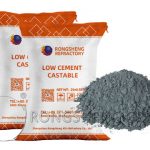
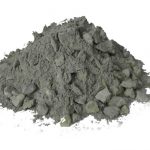
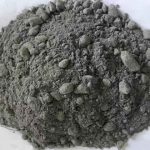
Refractory castables, as lining materials for new dry-process rotary kilns, can, through proper configuration, protect production equipment and ensure normal operation at high temperatures, effectively reducing system energy consumption. Suitable refractory castables for different parts of large and medium-sized new dry-process kiln systems are discussed below.
Problems that may arise with refractory castables in rotary kilns
1) Refractory castables at the kiln inlet typically have a service life of 4-8 months. Common problems include castable spalling, flaking, and poor resistance to alkali corrosion.
2) Refractory castables in the burner typically have a service life of 3-5 months. Frequent temperature changes and large temperature differences during use can easily lead to cracking and spalling of the castable in the first 1 meter of the burner.
3) The combustion of low-grade raw materials, anthracite, inferior coal, and solid waste increases the content of harmful components such as alkali, sulfur, and chlorine throughout the kiln system. The C4 and C5 cone sections, their feed pipes, the decomposition furnace cone section, and the smoke chamber are prone to crusting, leading to frequent use of air cannons and water guns, which is both unsafe and disrupts normal production.
4) Under normal circumstances, the temperature of the dust-laden tertiary air is 750–950℃, and the wind speed is above 20 m/s. Furthermore, the clinker particles in the tertiary air are hard, causing severe wear on the refractory castables in the tertiary air duct bends and valves. The service life is as short as 2–3 months, and at most only about 6 months. Once the refractory castables in the tertiary air duct bends or valves are worn away, the bends or valve plates will be worn through, necessitating a kiln shutdown.
Rational Selection of Refractory Castables in Rotary Kiln Lining
Refractory Castables for Kiln Inlets
At the kiln inlet of a rotary kiln, the clinker outlet temperature is around 1400℃, while the secondary air temperature fluctuates frequently due to kiln conditions. With the expansion of cement plant scale, the clinker volume at the kiln inlet is also increasing, correspondingly increasing the thermal and mechanical stress on the kiln inlet refractory castables. Therefore, the kiln inlet refractory castables should possess sufficient refractoriness, mechanical strength, thermal shock stability, and alkali resistance under high-temperature environments. It is recommended to use high-performance kiln inlet-specific refractory castables or improved kiln inlet-specific refractory castables. These products have excellent anti-sparing properties, high-temperature alkali resistance, and resistance to cement clinker erosion.
Refractory Castables for Burners
The burner operates in an environment of around 1400℃, with a flame temperature of around 2000℃, and operates for extended periods in an alkaline atmosphere. Compared to the kiln inlet, the temperature changes are more frequent and the temperature difference is greater, thus requiring higher thermal shock resistance. The burner front end is constantly subjected to the scouring of high-temperature airflow carrying clinker dust, especially the lower part. Therefore, the burner refractory castable needs sufficient wear resistance. It is recommended to use burner-specific castable or improved burner-specific refractory castable. This product has excellent anti-sparging properties and thermal shock stability.
Refractory Castables for Kiln Hoods and Grate Coolers
For some large rotary kilns, the lower part of the kiln hood experiences a relatively high heat load. If the curing and temperature rise of general high-alumina refractory castable is not properly controlled, it is prone to cracking and spalling. The top of the kiln hood, near the tertiary air duct, also experiences relatively severe scouring from the dust-laden airflow, and the top castable is more difficult to apply, requiring high material flowability and early strength. The top of the grate cooler front end operates at high temperatures with significant temperature variations. The low walls on both sides of the front end are constantly subjected to wear from the high-temperature clinker flowing through the kiln opening, and also bear certain mechanical and thermal stresses. It is recommended that high-strength, wear-resistant castables with good high-temperature performance, strong thermal shock resistance, and wear resistance be used for these two parts.
Refractory castables for tertiary air duct elbows and valves
These areas experience significant temperature changes and are subjected to erosion by high-temperature clinker particles, making the castable prone to loosening and spalling. This is the area most susceptible to wear in cement plant operations. Wear-resistant refractory castables are recommended.
Refractory Castables for C4 and C5 Cones and Their Feed Pipes, Decomposer Cones, and Smoke Chambers
These areas are highly prone to scaling, which is difficult to remove. Manual cleaning with iron tools is required, inevitably causing mechanical damage to the refractory castables. Severe scaling necessitates a kiln shutdown. High-strength, anti-scaling silicon carbide castables are recommended.
Refractory Castables for Other Areas
High-strength, alkali-resistant castables are recommended for C1-C3, high-temperature, high-strength, alkali-resistant castables for C4 and C5 (except for the cone section), and high-strength, wear-resistant castables for the decomposer. Recommended Refractory Castable Configuration Scheme for New Dry Process Kiln Systems and Technical Specifications of Various Castables.
1. Improving the wear resistance and thermal shock stability of castables to achieve long service life.
Measures to Improve the Wear Resistance of Wear-Resistant Castables
1) Reducing the critical particle size of the castable from 8mm to approximately 5mm.
2) Improve the flexural strength of castables at intermediate temperatures (900℃). The flexural strength of castables indirectly reflects their wear resistance; the current trend is to require a hot flexural strength ≥20MPa.
3) Improve the matrix bonding ability of castables. Using multi-stage micro and ultrafine powder formulations creates the densest possible packing, promoting sintering at intermediate temperatures and improving the matrix bonding ability of the castable.
4) Select high-hardness refractory raw materials as aggregates.
Measures to Improve the Thermal Shock Resistance of Wear-Resistant Castables
1) Use composite aggregates and composite powders (i.e., multiphase technology).
Utilize the difference in thermal expansion coefficients between the aggregates and the matrix to balance the strength and thermal shock resistance of the castable.
① The combination of high-expansion aggregates and low-expansion matrix exhibits excellent thermal shock resistance.
② The combination of low-expansion aggregates and low-expansion matrix results in a castable with uniform structure and high mechanical strength. Typical thermal shocks do not generate significant stress within the castable, leading to cracking.
2) Reduce the thermal expansion coefficient of materials.
Select materials with relatively low thermal expansion coefficients to improve the thermal shock resistance and mechanical impact resistance of the castable.
2. Reduce Fe2O3 content. Control the Fe2O3 content in the castable to ≤1.5% to reduce lining spalling.
3. Reduce the bulk density of the castable to alleviate equipment load.
Reduce the bulk density of the castable while ensuring wear resistance and thermal shock resistance. When the bulk density decreases from 2800-3000 kg/m³ to 2100-2400 kg/m³, the consumption of castables decreases by 15%-40%.
Manufacturers of Refractory Castables for Cement Plants
The application and development of refractory castables for cement plants should conform to the concepts of environmental protection and circular economy. Rational selection of castables can extend their service life, effectively protect equipment, reduce system heat loss, reduce system scaling and blockage, and reduce the frequency and duration of kiln shutdowns for maintenance. This improves system operating rate, achieving the goals of stable, high-yield, and low-energy consumption in the kiln system.