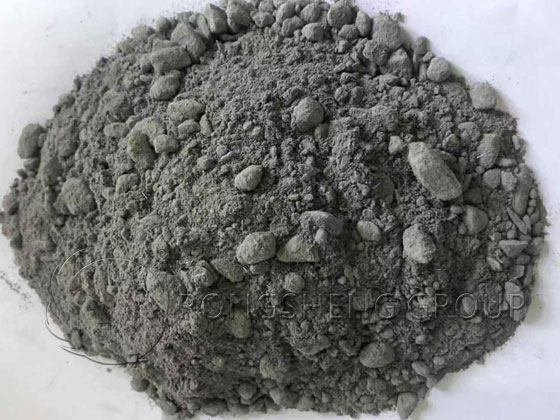
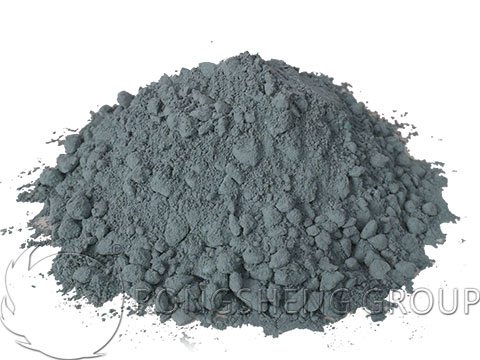
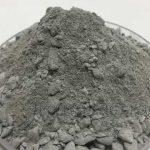
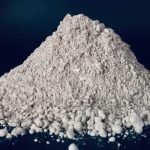
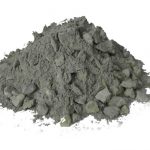
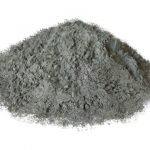
The optimal operating environment for silicon carbide castables is above 1500℃ in a reducing or weakly reducing atmosphere, which is a prerequisite for the release of their performance. Within this range, the SiC particles inside the material remain stable, and the surface layer undergoes slight graphitization, spontaneously forming a dense barrier. The resistance to erosion and corrosion increases with increasing temperature.
Limitations of Oxidizing Atmospheres
In high-temperature oxidizing environments, SiC should form a SiO₂ protective film. However, due to the high porosity of the silicon carbide castable, the film is prone to cracking due to mechanical impact and thermal stress. Oxygen diffuses inward along the cracks and pores, causing SiC to pulverize layer by layer, leading to a continuous decrease in matrix strength and eventually peeling. Even at low oxygen partial pressures, oxygen can still slowly penetrate into the capillaries, resulting in a decrease in overall quality. Therefore, high-oxygen environments should be considered prohibited areas.
To delay accidental oxidation, metallic silicon is often introduced into the formulation. It preferentially combines with free oxygen, locally reducing the oxygen partial pressure and providing sacrificial protection for SiC. Alternatively, sodium salt sol or silica sol impregnation is used to seal the open pores of the nano-particles, forming a continuous mullite-glass phase after medium-temperature curing, which combines anti-oxidation and anti-permeation functions. Pure calcium aluminate cement with an appropriate amount of alumina micro powder is used as the binder, which can complete ceramic bonding at around 1450℃, reducing the catalytic oxidation of SiC by free CaO.
Typical Applications and Naming Conventions
Circulating Fluidized Bed Boilers: In the dense phase zone of the furnace, return feeder, and slag cooler, temperatures reach 900–1000℃, but particle erosion is high. High-wear-resistant castables with SiC ≥ 55% are used. Service life is increased from 12 months for ordinary low-cement materials to 18–24 months.
Blast Furnace Main Iron Ditch: Hot metal temperatures reach 1500–1550℃. Intermittent tapping causes strong thermal shock. SiC–Al₂O₃–C composite castables offer dual resistance to slag and iron erosion and thermal shock, allowing for a throughput of 120,000–150,000 tons.
Cement Rotary Kiln Charging Strip: Frequent kiln lining adhesion and detachment occur. SiC-based anti-scabbing castables utilize high thermal conductivity (λ ≥ 15 W·m⁻¹·K⁻¹) to quickly balance the lining temperature difference. Scabbing frequency is reduced by 40%, and kiln operating rate is increased by more than 3%.
Strictly Prohibited in Low-Temperature Oxidation Environments: Under temperatures below 1200℃ and in an oxidizing atmosphere, SiC oxidation rates are low but continuous weight loss occurs, resulting in matrix strength lower than ordinary high-alumina castables, leading to a “performance inversion.”
Heating Schedule: The initial baking should follow a three-step curve (150℃×8 h, 350℃×12 h, 600℃×8 h) to fully expel the sol and organic binder, preventing internal carbonization and cracking.
Repair Principles: When localized erosion exceeds 1/3 of the lining thickness, a composite method of “excavation and patching + overall casting” with the same material castable should be used. The interface between the old and new surfaces should be moistened with SiC fine powder slurry to ensure thermal expansion matching.
In summary, the value of silicon carbide castables lies in the three harsh conditions of “high temperature, reduction, and strong erosion.” With proper selection of atmosphere and temperature range, and by suppressing oxidation through methods such as metal silicon buffering, sol-gel sealing, and gradient ceramic bonding, its service life can be increased by more than half compared to ordinary low-cement castables. Conversely, if placed in a low-temperature or high-oxygen environment, it will fail prematurely due to continuous oxidation. Users should define the furnace operating conditions before selecting materials, and then match the appropriate SiC content and composite process to transform this “high-temperature bonus” into tangible economic benefits.