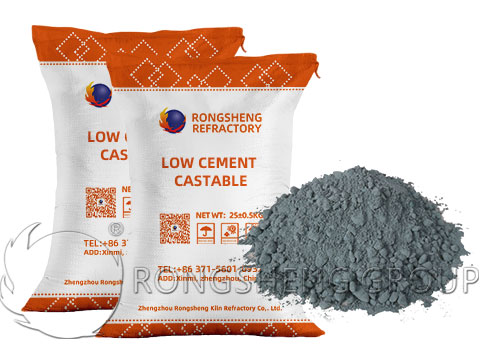
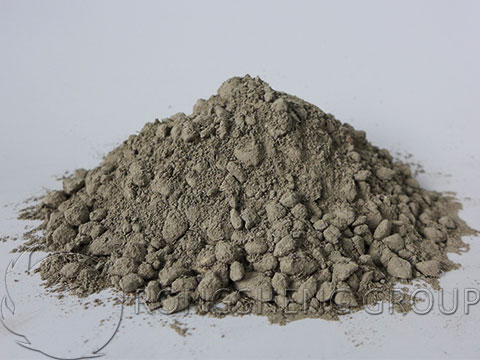
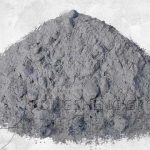
Rongsheng is a manufacturer of monolithic refractory materials. Low-cement castable is currently the most widely used series of monolithic refractory castables in industrial kilns. It is called low-cement castable because it contains a small amount of cement. The production process of this series of castables is quite strict. Many factors affect the performance of low-cement castable, including ultra-fine powder, aluminate cement, and other additives. In addition, factors such as water addition, on-site construction, and baking all affect the quality of the castable.
Factors Affecting the Performance of Low Cement Castable
Ultra-fine powder is the backbone that determines the performance of low-cement series castables. Without ultra-fine powder, there would be no low-cement series castables. Low-cement refractory castables are castables evolved from castable evolution technology, and micro-powder technology has only been used in the past decade or so. Ultra-fine powder mainly functions as a dispersion promoter and structural densifier. When cement particles are highly dispersed without flocculation, the addition of ultra-fine powder can fully fill the micro-pores in the organizational structure, thereby enhancing the material strength. However, excessive use of SiO2 ultra-fine powder can increase strength but decrease refractoriness, while too little addition can affect on-site construction due to poor fluidity. Therefore, ultra-fine powder is a significant factor affecting the quality of low-cement series castables.
Aluminate cement plays a setting role in castables, and the properties of low-cement castables formulated with different varieties vary. When the mix ratio and process conditions are basically the same, both CA-50 cement and CA-70 cement are used in an amount of 5%. When dried and sintered at 800℃ and 1100℃, the compressive strength of castables with CA-50 cement is 45-59 MPa, while that of castables with CA-70 cement is 65-74 MPa. It can be seen that CA-70 cement formulated with CA-50 cement has better performance than low-cement castables formulated with CA-50 cement. Aluminate cement is also another major factor affecting the quality of castables.
During the construction process, adding too little water results in uneven mixing, while adding too much water affects the setting speed and subsequent strength. Therefore, the amount of water added during the construction process is also a factor affecting the quality of low-cement castable materials. Additionally, baking must be conducted according to a specific temperature curve. Poor baking can lead to spalling and slagging. Therefore, baking is also a major factor affecting low-cement castable materials.
Therefore, to ensure the quality of low cement castable, it is crucial to control the addition amount of binder during the production process. Moreover, different types of aluminate cement and their respective addition amounts should be adjusted according to the operating temperature, in order to produce low cement castable with good practical performance.
Low-cement refractory castable refers to refractory castable with a Cao content of less than 2.5%, which is bound by calcium aluminate cement. Specifically, castable with a calcium aluminate cement addition of about 1/2 to 1/3 of that in ordinary calcium aluminate cement castable is called low-cement castable. According to the American ASTM standard, castable with a CaO content of 1.0% to 2.5% is considered low-cement castable.
Unlike traditional refractory castables, the matrix of low-cement castables is made by replacing some or most of the calcium aluminate cement with ultra-fine powder (with a particle size less than 10um) that has a condensation bonding effect and has the same or similar chemical composition as the main material of the castable. Therefore, this type of castable belongs to the category of castables where hydration bonding and condensation bonding coexist.
Due to the substitution of a portion of calcium aluminate cement with ultrafine powder (micro powder), low-cement castable possesses the following advantages:
(1) The low CaO content in the castable material can reduce the formation of low-melting phases in the material, thereby enhancing refractoriness, high-temperature strength, and resistance to slag erosion.
(2) During construction, the amount of water required for mixing the castable is only 1/3 to 1/2 (approximately 4% to 6%) of that for ordinary castable. Therefore, it has low porosity and high bulk density.
(3) After casting and molding, there is less cement hydrate formed during curing, so there is no significant destruction of hydration bonds during heating and baking. This does not lead to a decrease in strength at moderate temperatures, but rather, as the heat treatment temperature increases, the strength gradually improves.
(4) By making appropriate adjustments to the particle size composition of the castable, it can be formulated into self-flowing castable and pumpable castable.
What are the materials of low cement castables? The materials of low cement castables include clay, high alumina, mullite, corundum, chrome-corundum, zirconia-mullite, zirconia-corundum, alumina-spinel, and carbon-containing and silicon carbide materials.