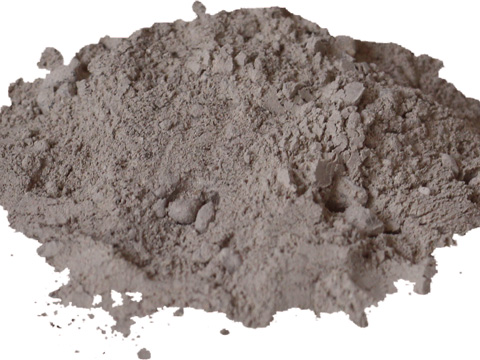
Refractory spray coating materials belong to the category of amorphous materials in refractory materials. They can be lightweight, heavy, or semi-heavy.
Lightweight Refractory Spray Coating
Lightweight refractory spray coatings serve as thermal insulation and are used as insulation layers. For small areas, they can be applied directly. Because of their short application time, lightweight spray coatings are convenient and quick to use, even for large quantities; hundreds of tons of coating can be completed within a few hours.
Heavyweight Refractory Spray Coating
Heavyweight refractory spray coatings are generally used for lining hot blast stoves and blast furnaces, and also for emergency repairs of lime kiln linings. Currently, some manufacturers directly spray them onto the linings of vertical lime kilns as a working layer, offering the advantage of rapid application.
Semi-Heavyweight Refractory Spray Coating
Semi-heavyweight refractory spray coatings provide both insulation and can be used as a working layer in furnace linings, chimneys, and pipes where temperatures do not exceed 1000℃. Semi-heavyweight refractory spray coatings are used for flue and chimney linings. Because the temperatures in flue and chimney linings are not high, excessively thick lining materials are not suitable. Therefore, many manufacturers choose semi-heavyweight spray coatings, using them for both insulation and as a working layer. This saves internal space and also blocks wind and smoke erosion.
Spray coatings have a rebound rate; the national standard is 20%, while the rebound rate of spray coatings currently on the market is around 8-10%. Professional personnel and a spraying machine are required for proper application. For small quantities, manual application using putty is also possible.
Material Selection
Spray coatings are available in neutral, acidic, and alkaline types. The appropriate material should be selected based on the furnace lining atmosphere. A better furnace lining atmosphere results in a longer service life when the furnace lining and the material are in the same atmosphere.
What are the differences between refractory spray coatings and refractory repair materials?
Refractory spray coatings and repair materials are important varieties of monolithic refractories, and have seen rapid development in the last decade or so, with production volumes second only to refractory castables. In kilns and thermal equipment, these materials can be used to spray new linings or repair furnace linings. Production practice has proven that these materials are an effective technical measure to accelerate construction progress, shorten furnace repair time, extend kiln service life, and reduce refractory material consumption, making them promising materials.
Refractory Spray Coatings
Refractory spray coatings are materials applied by spraying refractory mixtures onto the target surface using a spray gun. Spraying is carried out using a spraying machine or spray gun and is a relatively new process in furnace construction and repair. The refractory spray coating is propelled through a pipe by compressed air or mechanical pressure to achieve sufficient velocity, and then sprayed onto the target surface through a nozzle to form a strong coating layer. Spraying methods are divided into three categories: wet method, dry method, and flame method. Based on the state of the material received on the sprayed surface, refractory repair materials are further divided into two categories: cold material spraying and molten material spraying.
Refractory Repair Materials
Refractory repair materials refer to materials used for repairing kilns and thermal equipment, commonly known as refractory repair materials. These materials are actually classified according to their application. Construction methods include spraying, patching, pressing, pumping, or grouting. There are many varieties of refractory repair materials, mainly including refractory spraying materials, molten spraying materials, refractory patching materials, refractory pressing materials, refractory pumping materials, and refractory grouting materials. Spraying is the most common application method for these materials. Therefore, this chapter will not cover them, and only the important varieties will be introduced. Refractory repair materials have excellent performance, are easy to use, and can improve the service life of kilns, increase output, reduce costs, and provide significant economic benefits. Therefore, the development of refractory repair materials has been rapid in recent years, and their output far exceeds that of refractory spraying materials. Many materials are interchangeable between refractory spraying materials and refractory repair materials; only the construction methods differ, hence the different names. For example, refractory spray coatings and refractory grouting materials, as well as refractory patching materials and filler materials, have basically the same composition and properties, but their construction methods differ, hence their different names.
The material composition of refractory spray coatings and refractory repair materials is basically similar to that of the same type of refractory castable. The difference lies in the smaller critical particle size of the refractory aggregate, generally 3-5 mm. The combined amount of refractory powder, ultrafine powder, and binder is relatively high, generally 35%-45%. Due to the similar material composition, the setting and hardening mechanism and physicochemical changes at high temperatures of these materials are also basically the same.
The key technical aspects of refractory spray coatings and refractory repair materials are mainly adhesion, bonding, strength, and sintering properties. These are also basic characteristics that the materials should possess; otherwise, the service life of the sprayed and repaired layers will be reduced. These characteristics are closely related to the material itself, but more importantly, they are constrained by the equipment such as the spraying machine and the construction process parameters, as well as influenced by factors such as the state of the sprayed material and the usage conditions. These limiting and influencing factors are the basis for selecting refractory spray coatings and refractory repair materials, and are also key to obtaining a good spray or repair layer. Therefore, they should be selected rationally, carefully adjusted, and strictly controlled.