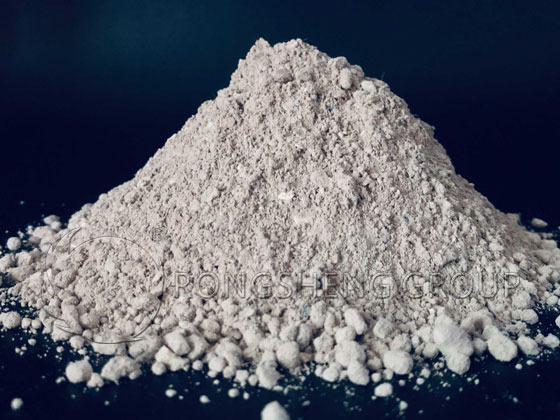
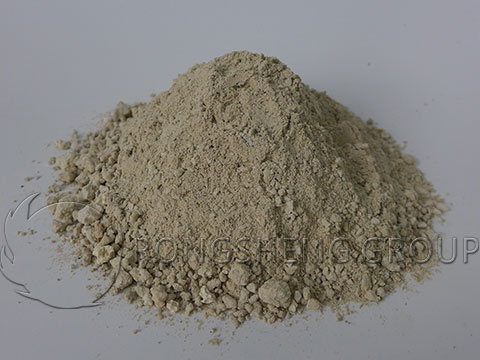
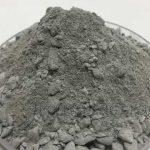
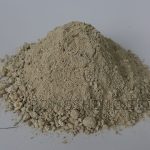
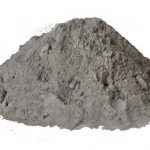
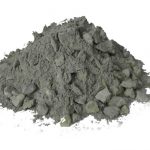
Insulating refractory castables—also known as lightweight refractory castables, thermal-insulating refractory castables, or simply insulating castables—are hydraulic, unshaped insulating materials. They are formulated by dry-mixing lightweight insulating aggregates as the primary component with refractory powders, binders, and additives in optimal proportions. Characterized by low bulk density, low thermal conductivity, and superior thermal insulation performance, they are suitable for on-site casting. These materials are widely used for the thermal insulation of equipment such as boilers and industrial furnaces, serving primarily to insulate the units and prevent heat loss.
Lightweight thermal insulation castable—also known as lightweight heat-insulating castable—is a castable refractory material with a true porosity of no less than 45%. It is characterized by low bulk density, high strength, excellent thermal insulation properties, low thermal conductivity, and high refractory strength. It offers superior overall performance, including resistance to spalling and a long service life; it helps maintain uniform furnace temperatures and saves energy. Primarily used for the insulation layers of kilns and furnaces, it can be cast or shaped to form monolithic linings or used for repairs in various configurations.
Lightweight Mullite Castable
Lightweight mullite castable features high strength, excellent volume stability, and outstanding thermal shock resistance. It resists chemical erosion, scouring, and abrasion during service. With a high operating temperature, it can serve as a working lining in direct contact with flames. Applications include linings for light diesel and ethane cracking furnaces in petrochemical tubular heaters, atmospheric and vacuum distillation units, sulfur recovery units, and steam boilers; insulation layers for hex-mesh (tortoise-shell) structures; single-layer insulation for reactor-regenerator vessels and piping; and linings for industrial furnace doors, peep holes, and observation ports.
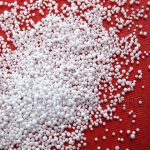
Alumina Hollow Sphere Castable
Alumina hollow sphere castable achieves high thermal resistance primarily through the sealed pores within the hollow sphere raw material and the pores within the product matrix. For a given porosity, the more dispersed the internal pores and the smaller their diameter, the greater the resistance to convective heat transfer within the pores. Furthermore, based on scattering principles, the resistance to phonon and photon thermal conduction increases, thereby reducing radiative heat transfer.
Key Considerations for Selecting Bulk Density in Lightweight Refractory Castables
The Direct Relationship Between Bulk Density and Weight
Bulk density directly determines weight per unit volume: the lower the bulk density, the lighter the material; the higher the bulk density, the heavier the material. In furnace design, weight is often a primary constraint—particularly for suspended or thin-walled components such as ducts, settling chambers, and stacks. An excessively heavy lining can overload the steel structure and even compromise the service life of the furnace body.
Balancing Thermal Insulation and Wear Resistance
Thermal Insulation Requirements: Lightweight castables feature high porosity and low thermal conductivity; lower bulk density yields superior insulation performance. Energy-saving efficiency is optimal at a bulk density of ≤1.2 g/cm³, whereas performance drops significantly if it exceeds 1.3 g/cm³.
Wear Resistance Requirements: Higher bulk density increases the number of bonding points between aggregate particles, thereby enhancing resistance to erosion and mechanical abrasion. In areas subject to intense flame impingement, a bulk density below 1.3 g/cm³ makes the surface prone to dusting and spalling.
Comprehensive Balance: For applications requiring both thermal insulation and resistance to a certain degree of erosion, a “lightweight working lining” with a bulk density of 1.5 g/cm³ is recommended to balance weight limitations with wear resistance needs.
Technical Essentials for Lightweight Castables (1.5 g/cm³ Bulk Density)
Raw Material Selection: Synthetic lightweight aggregates (e.g., lightweight mullite or lightweight bauxite) must serve as the primary constituent. The inclusion of heavy impurities—such as crushed brick or waste castable—is strictly prohibited, as this leads to uncontrolled density and reduced strength.
Bonding System: Incorporate additives for rapid drying and hardening—specifically, anti-explosion fibers (0.1%–0.15%) to disperse shrinkage stress; metallic silicon (≤2%) to enhance high-temperature oxidation resistance; and pure calcium aluminate cement (≥70% Al₂O₃) to ensure early-stage strength.
Construction performance: Water addition is controlled at 12%–14%, and the vibration flow value is ≥180 mm, ensuring self-flowing filling in complex areas; the 24-hour demolding strength is ≥4 MPa, meeting the requirements for rapid dry-out.
Typical Application Areas for Lightweight Castables
Chimneys and Flues: Serve as both the thermal insulation layer and the working lining; a material with a bulk density of 1.5 g/cm³ can keep the outer shell temperature below 80°C while resisting erosion from dust-laden flue gas.
Settling Chamber Roofs: Subject to weight limitations but must withstand impacts from rebounding particles; a lining thickness of 100–120 mm using the 1.5 g/cm³ density grade is sufficient, reducing weight by over 35% compared to traditional dense materials
Hot-Blast Duct Elbows: Characterized by abrupt changes in airflow direction and high erosion angles; linings with a bulk density of 1.5 g/cm³ offer a service life of over three years—double that of the 1.2 g/cm³ grade.
Selection Recommendations for Purely Insulating Areas
For areas free from flame impingement and mechanical abrasion—such as outer insulation layers for furnace walls or piping—lightweight castables with a bulk density of 1.0–1.2 g/cm³ are preferred. Thickness is determined via thermal calculations; generally, for every 0.1 g/cm³ reduction in density, the load of a 100 mm thick lining decreases by 10 kg/m², and energy efficiency improves by 3%–5%.
Simple Methods for Assessing Lightweight Castable Quality
Appearance: Uniform cross-section, no voids larger than 3 mm, and no powdering when rubbed by hand.
Bulk Density: After drying a field sample and weighing it, the deviation between the measured value and the nominal value should be ≤±0.05 g/cm³.
Cold Crushing Strength: After drying at 110°C for 24 hours, strength should be ≥8 MPa (for the 1.5 g/cm³ grade), ensuring a breakage rate of less than 2% during transport and installation.
Lightweight refractory castables are not simply “lighter is better” or “heavier is more durable”; rather, the choice requires balancing weight, thermal insulation, and abrasion resistance based on specific operating conditions. Designers should first determine the maximum allowable load and maximum service temperature for the area, then select the appropriate bulk density grade by evaluating the factors in the order of temperature, erosion, and weight. Finally, through the precise matching of raw materials and construction techniques, the comprehensive goals of a long-lasting, low-energy-consuming, and lightweight lining are achieved.