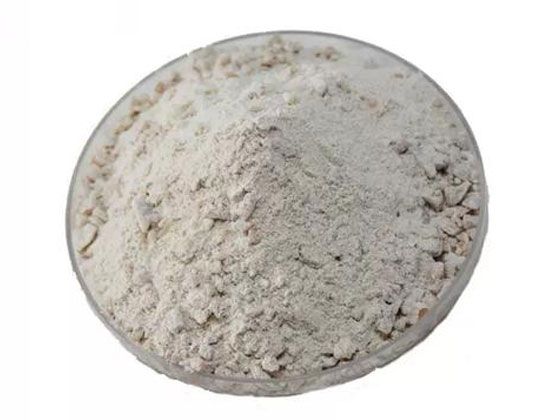
Silica ramming mass is a dry ramming material composed of high-purity microcrystalline quartz sand and powder, blended with high-temperature sintering agents and mineralizers. Thanks to a proprietary particle size distribution design, a dense monolithic furnace lining can be achieved using various ramming techniques. It is primarily used for the working lining of coreless induction furnaces for melting and holding cast iron and cast steel. Because the quartz grains are fine (6–260 μm), the boric acid (H3BO3) used in traditional processes is not required. Furthermore, the action of the mineralizers ensures a high conversion rate of α-quartz to cristobalite during the initial sintering heat-up; this results in shorter heat-up times and provides excellent volumetric stability, thermal shock resistance, and high-temperature strength. During normal operation, a loose backing layer is maintained.
Analysis of existing data indicates that the following properties are of critical importance when optimizing the composition of refractory ramming masses: linear dimensional changes during drying and firing; flexural and compressive strengths in both dried and fired states; porosity of the fired body; and the refractoriness and load-softening temperature of the material.
Key Factors Influencing the Processing Properties of Silica Refractory Ramming Masses
It is well known that the primary factors influencing the processing properties of silica refractory ramming masses include: the amount of clay added to the siliceous raw materials; the quantity of quartz sand used to replace silica rock; the quantity of calcium oxide used to replace clay; the combined addition levels of silica rock, clay, and calcium oxide; the amount of crushed silica brick added; the particle size distribution of the silica rock; and the content of alkali-bearing components in the mixture.
Factors Influencing the Processing Properties of Refractory Ramming Masses
The raw material components used to study the properties of the silica refractory ramming mass were silica rock from the Kaytash mine, clay from the Angren mine, and quartz sand from the Dzheroy-Sardara mine; the chemical compositions of these raw materials were analyzed.
According to relevant literature, the particle size of raw materials significantly affects the properties of refractory ramming masses after high-temperature firing. Therefore, to develop a suitable mix formulation using these components, aggregates with various particle size distributions were prepared.
In the prepared silica-clay mixtures, the clay content ranged from 5% to 35%, representing a significant addition level. Test specimens were fired in a laboratory silicon carbide rod electric furnace using a slow heating rate up to 1350°C, followed by a 5-hour soak at the peak temperature.
Based on the mix formulations and the test results of the fired specimens (which were based on the silica-clay mixture), it is evident that this type of formulation is suitable for producing refractory ramming masses.
In this context, increasing the clay content resulted in higher drying shrinkage and reduced specimen dimensions. However, when Angren clay was used at a content of 20%, the specimens exhibited favorable sintering shrinkage characteristics. It was also observed that when the clay content was below 20%, the properties of the fired specimens remained relatively stable; conversely, significant changes in properties occurred when the content exceeded 20%. At clay addition levels below 20%, the porosity of the specimens ranged from 23% to 26%. Experimental results indicate that the amount of clay added to the silica from the Kaytash deposit should not exceed 25%; exceeding this limit causes a sharp decrease in specimen porosity and an increase in strength. Changes in specimen porosity are accompanied by alterations in physical and mechanical properties. As the kaolin in the mixture acts as a binder, the compressive strength of the specimens increases steadily with the clay content. It was also observed that while there was no significant difference in flexural strength as the clay content increased from 5% to 20%, the compressive strength showed a consistent pattern of change across the 5% to 35% clay content range.
Similarly, because the clay in the silica-clay mixture functions as a binder, the flexural strength of the specimens also increases steadily with the amount of clay in the mix.
In this context, the refractoriness of the specimens depends on the amount of clay added to the silica-clay mixture. Refractoriness tests demonstrate that the refractoriness of the mixture decreases progressively with the addition of clay from the Angren deposit; adding between 5% and 15% clay results in a reduction in refractoriness of 40–70°C.
To develop a new formulation for silica ramming mass, quartz sand from the Jeroiskoe deposit was used to replace a portion of the silica from the Kaitash deposit. Cylindrical specimens were prepared to investigate the effect of the Jeroiskoe quartz sand content on the physicochemical and mechanical properties of the ramming mass; these specimens were fired at 1350°C.
The use of Jeroiskoe quartz sand as a substitute for Kaitash silica in the mix attracted researchers’ attention because Jeroiskoe quartz sand consists of fine particles and is abundant in nature. However, quartz sand is typically screened by particle size, resulting in a mixture of various fractions; consequently, it is impossible to produce a high-quality ramming mass using a single type of quartz sand alone, and the material also exhibits low chemical reactivity. Subsequently, experiments were conducted using quartz sand as an additive in the siliceous mix. The results indicated that adding Jeroiskoe quartz sand reduced sintering expansion, attributed to the sand’s low resistance to deformation. Porosity increased with the addition of quartz sand, while flexural strength dropped sharply. Although the addition of finely powdered quartz sand slightly improved flexural strength, it resulted in higher porosity in the ramming mass body.
When the quartz sand content was 25%, the properties of the mix were slightly superior to those of the mix without quartz sand, likely due to an improved particle size distribution within the refractory ramming mass. At a 50% addition level of Jeroiskoe quartz sand, the specimens exhibited neither expansion nor shrinkage after firing. In contrast, adding an equivalent amount of natural quartz sand (along with a significant amount of clay) resulted in minimal sintering shrinkage. Under these conditions—with relatively low clay and quartz sand content—the flexural strength of the fired specimens increased slightly, while porosity remained largely unchanged. Based on the findings above, substituting silica rock with quartz sand results in a deterioration of the ramming mix’s properties when the substitution level reaches 50%; furthermore, the use of finely ground quartz sand offered no particular advantages.
Optimal Composition for Silica Ramming Mixes
Research was conducted on the effects of adding clay and substituting silica rock with quartz sand on the physical and mechanical properties of silica refractory ramming mixes. By determining the maximum permissible addition levels for Angren clay and Zheroisk quartz sand, the optimal composition for the ramming mix was established. The study clarified that in mixtures of silica rock and clay, the clay content should not exceed 25%. In mixtures comprising silica rock, clay, and quartz sand, the amount of quartz sand used to replace silica rock should also remain below 25% and be balanced against the clay content. Based on these results, an optimal formulation for producing silica ramming mixes was developed.