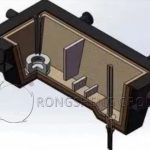
Heat loss from molten steel in the tundish occurs primarily in three forms: heat dissipation from the upper surface, heat storage within the lining, and heat conduction through the lining to the outer shell. By optimizing the performance specifications of the tundish lining castable and developing a long-life, semi-lightweight mullite castable, the goal of safe, stable, long-service-life, and energy-efficient tundish operation can be achieved.
Performance Characteristics of Semi-Lightweight Mullite Castables
Castables used for the permanent lining of tundishes feature an appropriate Al₂O₃ content, ensuring good slag and thermal shock resistance. The raw materials contain low levels of iron oxide impurities; however, the transition between high-valence and low-valence iron states during temperature drops involves significant volumetric expansion. Consequently, both the iron oxide content and the uniformity of impurity distribution influence the material’s thermal shock resistance. Semi-lightweight castables must possess low thermal conductivity to ensure effective thermal insulation for the lining as a whole. Castables with an Al₂O₃ content of 60%–65% are used for tundish permanent linings; their primary phase composition is mullite, which provides excellent thermal shock resistance.
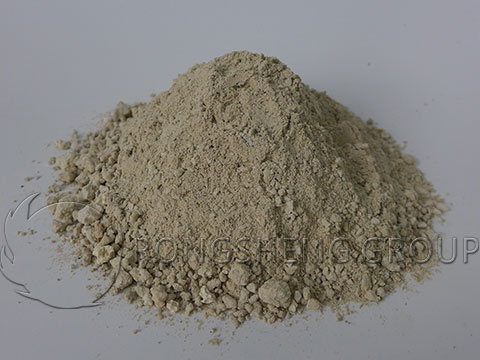
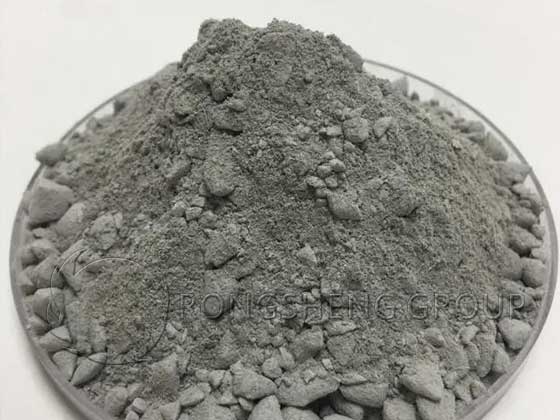
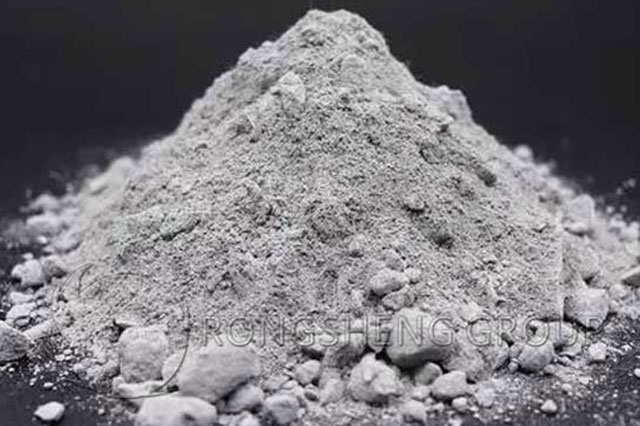
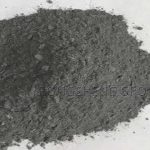
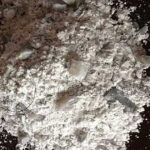
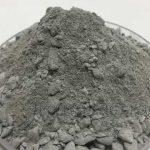
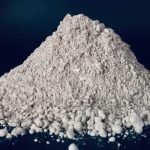
The mullite raw material used for the tundish permanent lining castable appears pale yellow with distinct angularity; most particles are flaky in shape.
Physical Properties
Regarding the physical properties of the mullite particles: the apparent porosity of the 5–3 mm particles is slightly lower, and the bulk density slightly higher, than that of the 8–5 mm particles. This is attributed to the fact that smaller particles tend to fracture along larger voids, thereby eliminating some defects.
Chemical Analysis
Chemical analysis of the two particle sizes of lightweight mullite raw material reveals that their chemical compositions are essentially identical. The primary constituents are Al₂O₃ and SiO₂; TiO₂ is introduced via the natural bauxite raw material, while the total content of other impurities is low, with an R₂O content of 0.08%.
In terms of slag resistance, for Al₂O₃-SiO₂ system raw materials, higher Al₂O₃ content leads to greater expansion and poorer thermal shock resistance. For sintered mullite, lower iron content results in better thermal shock resistance. Therefore, to ensure good thermal shock resistance, the Al₂O₃ content in the castable must be controlled and should not exceed 65%.
Phase Analysis
The phase compositions of the two mullite particle sizes are essentially the same; the primary phases are mullite, corundum, and quartz, along with a small amount of TiO₂.
Microstructural Analysis
Microstructural images of the mullite raw material reveal that the semi-lightweight mullite contains numerous irregularly shaped pores ranging from 20 to 60 μm, as well as a large number of closed pores (1–10 μm) within the grains. The mullite single crystals are granular and measure 1–3 μm in size.
Field Application Test of Semi-Lightweight Mullite Castable
The semi-lightweight mullite castable used for the tundish permanent lining demonstrated excellent performance during operation.
Simulation Results of Tundish Heat Balance
Temperatures at various interfaces were calculated via heat balance simulation to evaluate the safety of the materials used in the tundish. The parameters set for the simulation were: steel shell thickness 30 mm, insulation board 5 mm, lightweight brick 30 mm, castable 185 mm, coating 40 mm, and an interface temperature of 1550°C between the working lining and the molten steel. Upon reaching thermal equilibrium, the calculated interface temperatures were as follows: coating/castable interface, 1430°C; castable/lightweight brick interface, 956°C; lightweight brick/insulation board interface, 737°C; and insulation board/steel shell interface, 202°C.
The simulation results indicate that all materials operate within safe limits. Heat transfer simulations were conducted for both a brick-lined tundish and the test tundish (utilizing the semi-lightweight mullite castable). The results showed that for the brick-lined tundish, the steel shell temperature reached 298.2°C at thermal equilibrium, with a heat loss of 6749.8 W/m² through the shell. In contrast, the test tundish reached a steel shell temperature of 201.6°C at thermal equilibrium, with a heat loss of 3237.5 W/m².
Evaluation of Tundish Thermal Insulation Performance
Measurements of the tundish steel shell temperature revealed that, compared to the brick-lined tundish, the test tundish (featuring an insulation lining and a mullite castable permanent lining) exhibited significantly lower steel shell temperatures during the later stages of a casting sequence. This demonstrates superior thermal insulation and reduced heat loss. Based on a six-heat casting sequence, the average steel shell temperatures for the test tundish were 17°C and 83°C lower than those of the brick-lined tundish during the first and sixth heats, respectively; furthermore, the reduction in steel shell temperature became more pronounced as the number of consecutive casting heats increased.
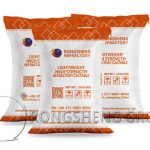
Rongsheng Lightweight Mullite Castable for Tundish Linings
(1) Utilizing semi-lightweight mullite castable for the tundish lining ensures excellent slag resistance, thermal shock resistance, and low thermal conductivity, thereby extending the service life of the tundish.
(2) Compared to brick-lined tundishes, those using semi-lightweight mullite castable experience lower heat loss and offer superior thermal insulation; this helps stabilize the molten steel temperature during the casting process, ultimately improving the quality of the steel billets.
Rongsheng Refractories recommends corundum-mullite castables for use as lining materials in areas such as the inlet and outlet zones of large cement kilns, coal injection pipes, and other industrial furnace linings. These castables are formulated using dense corundum and mullite as aggregates, combined with fine powders of white fused alumina, α-Al₂O₃, and mullite.
Performance characteristics of corundum-mullite castables: They combine the advantages of both corundum and mullite castables, featuring high-temperature strength, excellent thermal shock resistance, and resistance to structural spalling. They also exhibit a high load-softening temperature, low high-temperature creep rate, and good chemical corrosion resistance. They are suitable for use as anti-wear linings in large power plant boilers and as linings for other high-temperature furnaces.
To enhance the strength and operational performance of aluminosilicate castables, the following common technical measures should be adopted (specifically regarding cement-bonded castables):
(1) Matrix composition. The composition of the matrix significantly influences the service temperature, high-temperature mechanical properties, and sintering characteristics of the castable. The matrix should primarily consist of bauxite clinker with low K₂O and Na₂O content; cement dosage should be controlled and the mix proportion optimized so that the matrix composition approximates that of mullite (A3S2). Specifically, the Al₂O₃ and SiO₂ contents in the matrix are adjusted to promote the formation of mullite and slight volume expansion at high temperatures, thereby improving thermal shock resistance and high-temperature strength.
(2) Binder. Pure calcium aluminate cement is selected as the binder. Its main components include CaO·Al₂O₃ (calcium aluminate; decomposition temperature: 1600°C; characterized by high activity, normal setting speed, rapid hardening, high early strength, and minimal strength gain at later stages) and CaO·2Al₂O₃ (dicalcium aluminate; decomposition temperature: 1762°C; characterized by slower hydration and hardening, low early strength, and high later strength). It acts as a binder that cements aggregates and powders together through hydration and setting; an addition rate of less than 5% is recommended.
(3) Addition of appropriate amounts of micropowder. Micropowders fill the voids between particles, improve the internal structure, and promote cohesive bonding, resulting in a denser matrix; simultaneously, they significantly enhance fluidity and drastically reduce the water required for installation. If the addition exceeds 8%, the castable exhibits increased shrinkage and extensive cracking after drying at 110°C for 24 hours; therefore, an addition rate of 4%–5% is optimal.
(4) High-temperature strengthening agents. Corundum is characterized by a high melting point, chemical stability, and excellent high-temperature strength; it is advisable to use a powder fraction smaller than 0.088 mm at an addition rate of less than 15%.
If you have requirements for corundum-mullite castables, please contact Rongsheng Refractories. With professional production lines and years of experience in manufacturing and selling refractory materials, Rongsheng’s products are widely trusted by customers. If you are looking for high-quality refractory lining materials that offer wear resistance, erosion resistance, high-temperature capability, long service life, and ease of installation, Rongsheng is your best choice.