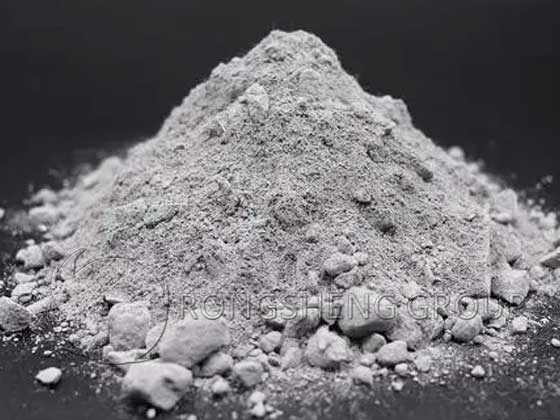
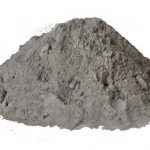
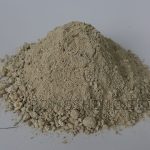
Low-cement and ultra-low-cement refractory castables are castable refractory materials containing less than 8% calcium aluminate cement. According to ASTM standards, low-cement castables require a CaO content of less than 2.5% (typically 1.0%–2.5%), while those with a CaO content of less than 1% are classified as ultra-low-cement castables. Unlike conventional refractory castables, these materials feature a matrix in which some or most of the calcium aluminate cement is replaced by ultrafine powders that are chemically identical or similar to the aggregate material; appropriate amounts of water-reducing agents and delayed-action accelerators are also added.
Characteristics of Low-Cement Refractory Castables
By replacing a portion of the calcium aluminate cement with ultrafine powder, this type of refractory castable exhibits the following characteristics:
The low CaO content reduces the formation of low-melting-point eutectic phases, thereby enhancing refractoriness, high-temperature strength, and slag resistance.
The water requirement for mixing is only one-half to one-third that of conventional refractory castables (approximately 4%–6%), resulting in low porosity and high bulk density.
Minimal cement hydration products are formed after molding and curing; consequently, there is no drop in intermediate-temperature strength caused by the breakdown of numerous hydrated bonds during heating. Instead, the material gradually sinters as the heat-treatment temperature rises, leading to a progressive increase in strength.
Classification and Application of Low-Cement Refractory Castables
Low-cement and ultra-low-cement castables are available in various material compositions, including fireclay, high-alumina, mullite, corundum, and carbon/silicon carbide-containing varieties. Their formulations consist of refractory aggregates, refractory powders, appropriate amounts of ultrafine powders, small to very small quantities of calcium aluminate cement (acting as a delayed-action setting accelerator), and trace amounts of dispersants (high-efficiency deflocculants). Multi-stage particle size grading is typically employed, ranging from 5–3 mm, 3–1 mm, 1–0.2 mm, 0.2–0.074 mm, and 0.074–0.044 mm down to particles smaller than 1 micron.
Compared to conventional refractory castables of the same material composition, low-cement and ultra-low-cement castables exhibit superior physical properties, as well as enhanced resistance to slag penetration and erosion. Typical physicochemical properties are observed in fireclay, high-alumina, and corundum-based low-cement castables.
Low-cement and ultra-low-cement refractory castables are currently being widely adopted for industrial furnaces in sectors such as metallurgy, petrochemicals, machinery manufacturing, and building materials, yielding excellent operational results and economic benefits.
Fireclay and high-alumina low-cement castables are suitable for use as linings in reheating furnaces, soaking pits, various heat-treatment furnaces, and rotary kilns.
Mullite-based low-cement castables can serve as linings for various high-temperature burners and as protective coverings for water-cooled pipes in reheating furnaces. Corundum and chrome-corundum low-cement refractory castables are used for linings in the “delta section” (center roof area) of electric arc steelmaking furnaces and for components in ladle metallurgy (secondary refining) units. Specific applications include monolithic linings for injection lances, linings for RH and DH vacuum degassing units and immersion tubes, linings for mains-frequency induction furnaces, and high-temperature wear-resistant linings for petrochemical catalytic cracking reactors. Al2O3-SiC-C low-cement castables are used as linings for blast furnace iron runners, cupola iron troughs, and monolithic injection lances for hot metal pretreatment.
MgO-Al2O3 or Al2O3-MgO·Al2O3 low-cement castables are used as linings for steel ladles and tapping runners.
Can high-alumina low-cement castables fully replace standard high-alumina castables?
High-alumina low-cement castables can indeed fully replace standard high-alumina castables. Standard high-alumina castables rely on a high proportion of high-alumina cement binder, resulting in high calcium content, which can compromise the material’s long-term strength. In contrast, high-alumina low-cement castables utilize high-grade cement with low calcium content, delivering superior performance across the board—from initial setting to long-term strength.
Current market trends and manufacturing practices indicate that standard high-alumina castables are largely no longer being produced; instead, low-cement formulations have become the standard for production, shipment, and application. Low-cement castables require significantly less water during installation—typically 6–7% compared to the 12% required for standard high-alumina castables—offering distinct advantages regarding setting times and the dry-out process.
Do low-cement castables replace standard castables?
Few end-users currently utilize standard high-alumina castables; while the names may be similar, the required performance specifications generally align with those of low-cement refractory castables. Manufacturers have largely moved away from adding large amounts of high-alumina cement binder, opting instead to produce low-cement castables directly. Even when users specifically request standard high-alumina castables, manufacturers often supply low-cement versions, as these offer improved service life and greater ease of installation.
Although the production cost of low-cement refractory castables is slightly higher than that of standard high-alumina castables, manufacturers prefer producing low-cement products. The low calcium content and reduced water requirements ensure product quality and reliability for the end-user, thereby fostering long-term supply relationships.
In summary, the shift toward high-alumina low-cement refractory castables—replacing products with high cement content—reflects both market trends and performance requirements. These low-cement castables are fully capable of replacing high-cement varieties in practical applications.