When the furnace lining operating temperature is 1300°C, the choice of castable depends on the specific furnace type and the atmosphere within the lining. Regardless of the material selected, the ultimate goal is to conserve energy and reduce consumption, thereby extending the service life.
How do You Select the Appropriate Refractory Material for a Kiln Lining?
Before making a selection, one must first consider the fuel used, the raw materials being processed, and the nature and corrosiveness of those materials (i.e., whether they are acidic or alkaline). Additionally, external factors such as gas velocity, mechanical stress (causing erosion or abrasion), and the combustion method must be taken into account.
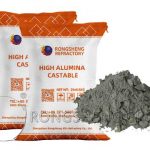
A furnace temperature of 1300°C refers to the temperature of direct flame contact, not the material’s rated refractory temperature. Distinguishing between refractoriness and service temperature is crucial; generally, high-alumina castables suffice for a 1300°C furnace temperature. Most high-alumina castables currently in use are of the low-cement variety. However, if severe corrosion is anticipated, the material choice should be based on the nature of the corrosive agent—selecting either acidic or alkaline corrosion-resistant materials. For acidic corrosion, sodium silicate-bonded or phosphate-bonded castables are suitable. For alkaline corrosion, highly wear-resistant materials or magnesia-based castables are appropriate; highly wear-resistant materials often contain silicon carbide, providing both corrosion resistance and abrasion resistance. When using magnesia-based materials, attention must be paid to moisture content and wind pressure within the lining.
Once the high-alumina castable is selected, the installation process is equally critical, as these materials come in various quality grades. If the material sets too quickly during the initial stage, the ratio of binder to micro-powder may be improper. Excessive cement content not only accelerates setting but can also compromise the material’s long-term strength.
If the high-alumina castable sets too slowly, consider the ambient installation temperature and carefully control the water addition. In cold conditions, the mixing water should be heated to 30°C before being added to the mix. Provided the material sets within 40 minutes and is subsequently cured according to a proper drying schedule, the service life of the high-alumina castable lining can be fully guaranteed.
65% Alumina-Mullite Castable: High-Temperature and Thermal Shock Resistant
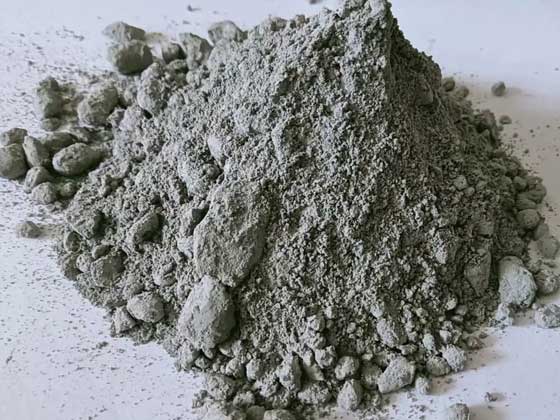
This high-alumina mullite castable features an Al₂O₃ content of ≥65% and mullite as its primary crystalline phase, offering a combination of high-temperature resistance, thermal shock resistance, and erosion resistance.
Key Specifications: Al₂O₃ content of 65%–70%; long-term service temperature of 1400–1500°C; bulk density ≥2.5 g/cm³; compressive strength ≥60 MPa (after drying at 110°C).
Core Advantages: 1. Excellent thermal shock and high-temperature resistance; resists cracking during repeated temperature fluctuations. 2. Resistant to erosion and abrasion; suitable for complex operating conditions. 3. Volume stability; no significant shrinkage at high temperatures. 4. Easy to use; simply mix with water and cast.
Main Applications: Linings for high-temperature furnaces and thermal equipment, including hot blast stoves, boilers, metallurgical furnaces, rotary kiln inlets, and tertiary air ducts in cement kilns.
Construction Guidelines: Water addition rate of 6–8%; use within 30 minutes of mixing. Vibrate thoroughly during casting to ensure density; cure for 24–48 hours. Dry out slowly at low temperatures to prevent explosive spalling caused by rapid heating.
Mix Proportions for High-Alumina High-Temperature Castables
High-temperature castables are a category of unshaped refractory materials; standard types typically operate within a temperature range of 800°C to 1,500°C, though specific material requirements may allow for even higher operating temperatures. Refractory manufacturers are thoroughly familiar with the formulation methods for these materials.
Standard high-temperature castables utilize CA-50 cement as a binder, combined with refractory aggregates, fines, and additives in specific proportions; the final product is obtained through mixing with water, molding, and curing. These castables are characterized by rapid hardening, high strength, low cost, easy availability, and ease of installation. When formulated using aluminosilicate materials, they also exhibit resistance to sulfate attack. The typical service temperature for this type of castable is approximately 1,400°C.
High-temperature castables represent a significant class of unshaped refractory materials. Generally, the combined content of CA-50 cement and refractory fines ranges from 27% to 30%, while refractory aggregates account for 70% to 73% of the mix; CA-50 cement typically constitutes 10% to 20% of the total composition.
For applications in medium-to-high temperature zones, the cement content should be minimized while the proportion of refractory fines is increased; the grade of the fines should match or exceed that of the refractory aggregates. Refractory aggregates must be selected based on the kiln’s operating temperature to ensure optimal material performance. Particle size distribution typically employs a two-stage grading system, though ungraded (run-of-mine) material may also be used; this is generally controlled by maintaining a sand ratio (the ratio of fine aggregate to total aggregate) between 0.45 and 0.55. Water content is usually expressed as a mass percentage, though it may also be stated in kilograms per cubic meter or as a water-to-binder ratio (the ratio of water to the combined mass of cement and fines).
The overarching principle is to minimize water usage while ensuring the workability of the castable mixture. It should be noted that standard mix proportions are not fixed; the specific mix ratio for the refractory castable is determined through testing during production or construction—based on the types of raw materials and service conditions—to meet the operational requirements of the kiln project. Furthermore, admixtures should be incorporated whenever possible to enhance the castable’s workability and refractory performance.
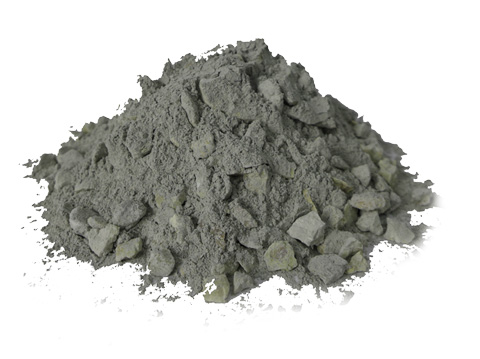
This is a monolithic refractory material primarily composed of high-alumina raw materials, characterized by both high strength and excellent wear resistance. It requires mixing with water for casting and forming, followed by curing and hardening before use.
Core Composition
The primary ingredients include calcined high-alumina bauxite and corundum (with an Al₂O₃ content typically ≥60%) to ensure high-temperature performance and structural strength. Wear-resistant reinforcing components, such as silicon carbide and steel fibers, are added to enhance resistance to erosion and abrasion. Binders like calcium aluminate cement or phosphates are incorporated to ensure rapid setting and hardening after casting.
Key Characteristics
High Strength: Compressive strength exceeds 60 MPa; the material is resistant to crushing damage and offers strong structural stability.
High Wear Resistance: Abrasion loss is significantly lower than that of standard castables, making it suitable for environments subject to frequent material erosion and friction.
High-Temperature Resistance: Suitable for long-term operation at temperatures between 1200°C and 1600°C; exhibits good thermal shock resistance and is unlikely to crack due to rapid temperature fluctuations.
Typical Applications
Industrial Furnace Linings: Areas in direct contact with materials, such as in cement kilns, metallurgical furnaces, and boilers.
Conveying Equipment Components: Areas prone to material erosion, such as storage hoppers, chutes, and air ducts.
High-Temperature Mechanical Components: Areas requiring both high-temperature stability and wear resistance, such as burner surroundings and furnace door frames.
Rongsheng is a manufacturer of high-alumina refractory castables, operating its own advanced, fully automated, and eco-friendly production lines for monolithic refractories. We guarantee reliable product quality, fast delivery, and competitive pricing. Contact Rongsheng to request free samples and a price quote.